Month: September 2016

Can Yoga Be Defined?

Posted on Updated on

Ask a dozen yogis and you’ll get a dozen answers.

To paraphrase Richard Freeman, one of Jo’s yoga teachers and a top American yoga master, yoga can be difficult to pin down:

Yoga is relaxation and meditation, and it is this and that, and as we continue to describe the practice of yoga we quickly realize that we are describing just the edges of the practice, and we become tongue-tied. While it is a perfectly reasonable question to ask, yoga is so vast and unique to each practitioner that is seems impossible to answer. It simply must be experienced.

Richard Freeman teaches in locations all over the globe, but his home studio is in Boulder, Colorado. If traveling to Boulder Colorado to practice with Richard isn’t possible, here are the titles of audio workshops that Jo has studied and used for over a decade in her teaching and personal practice:

The Yoga Matrix: The Body as a Gateway to Freedom
Learn about the teachings that have informed many schools of yoga, and find out how your body can be the beginning site for spiritual growth.
79

Yoga Breathing: Guided Instructions on the Art of Pranayama
Learn the essentials of yogic breathwork.
322

The Astanga Yoga Collection: Explore the Depths of Ashtanga Yoga
Learn the Ashtanga Yoga tradition, as taught to Richard by master yogi K. Pattabhi Jois of Mysore, India.
763

In addition to his classes and workshops, Richard offers a wealth of information on his website, Yoga Workshop. Explore his library of information and his food blog.

Tap this resource and grow your practice in new ways!
Yoga Involves the Entire Being
Posted on Updated on

If you’ve been following our Top Ten Reasons to Practice Yoga series, then you’ve read about all of the ways yoga improves your muscle tone, endurance, and overall physical well-being. But yoga is so much more than exercise for your body. It is exercise for your vagus nerve, a hot topic in medical research right now.


In Latin, “vagus” means wandering, and that is exactly what the vagus nerve does: It wanders throughout your torso and connects to all of your major organs. The vagus nerve helps control your parasympathetic nervous system, which slows your heart rate, keeps your intestines and glands active, and relaxes your sphincter muscles. All things that keep you feeling healthy and well.


_len3153_cropped


What are we learning about the vagus nerve? And how does it relate to yoga?


The vagus nerve is how your brain communicates with your organs. Research is showing that we can improve this communication a few different ways. One way is through electrical pulses. Kevin Tracey, a neurosurgeon, discovered a way to intervene and steer the conversation, and he has been successful in reducing inflammation in rheumatoid arthritis patients.


Another way is through building up our vagal tone. People with high vagal tone are said to be in constant communication with their bodies.


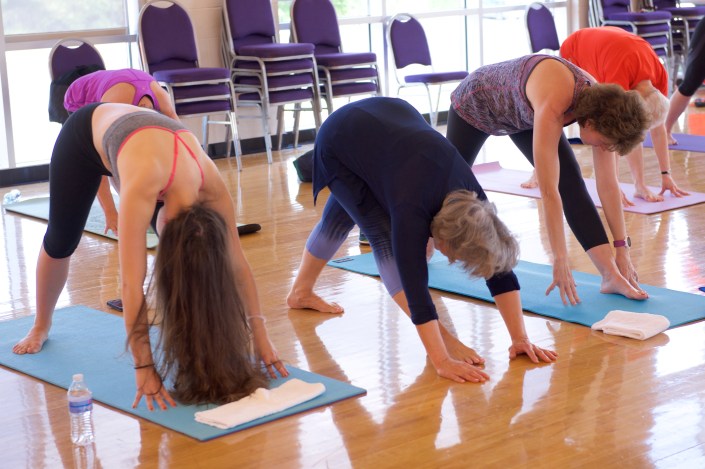
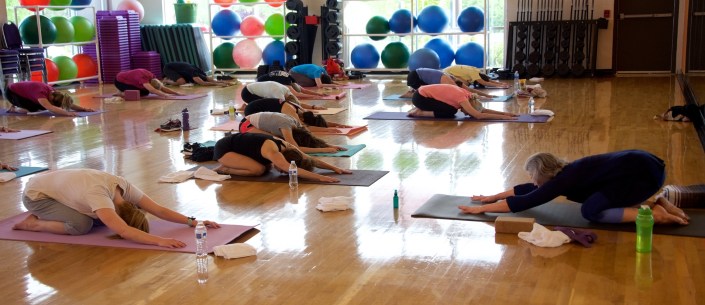
This is where yoga comes in. Controlled breathing sends your nervous system a signal to slow down and calm. When we engage in Ujjayi Pranayama, sometimes called victorious breath, we cue our vagus nerve to step in and relax our body. Chanting is another practice that provokes a relaxation response.


_wyz1667


Over time, these repeated cues strengthen our vagal tone, and our bodies become well-versed in producing a relaxation response. Without vagal tone, our bodies experience a variety of conditions, such as chronic pain and depression. Yet another reason to keep returning to the mat!


Our physical bodies become active on the mat, our mind focuses, and our overall being calms. When Jo tells us, “All you need to do to be a success in this class is breathe,” she means it. Breathing does us plenty of good.