Month: October 2016
Yoga Teaching is Yoga Learning
Coming up from November 2nd to the 9th, Jo will be training at Duke Integrative Medicine.

She’ll be participating in a professional program on Integrative Yoga. Having already taken a course with Carol Krucoff and Kimberly Carson–Integrating Ancient Wisdom with Modern Medicine–Jo is super excited about this one.
Integrative medicine–not to be confused with alternative medicine–is an approach to health and wellness that focuses treatments on a person’s whole being rather than any one symptom or illness. Integrative medicine utilizes a range of healing modalities and medical disciplines to find the underlying cause of illness, rather than treating isolated symptoms. Understanding the role that yoga can play in an overall plan for personalized care is key to helping students with their yoga practice. Jo will be learning new strategies for modifying yoga poses to suit the specific circumstances of students.
If you have a question for Jo, ask away! Write to Jo with your yoga questions, and we’ll post her answer here on the blog.
Q & A — What Modifications Should I Make for My Wrists?
Q: I’ve got arthritis in my wrists, but I love yoga and don’t want to give it up. What adjustments should I make?
A: You can certainly continue your yoga practice with a few simple changes.
First, you’ll need to practice ACCEPTANCE. There will be a few poses you will need to modify or skip. Arm balances may be fun and glorious for all of five seconds, but consider leaving them out of your repertoire. Find other poses that will provide the same benefits without causing pain. Remember the key to any yoga pose is to push your body just to the point of discomfort without crossing over to pain. If it hurts, don’t do it.
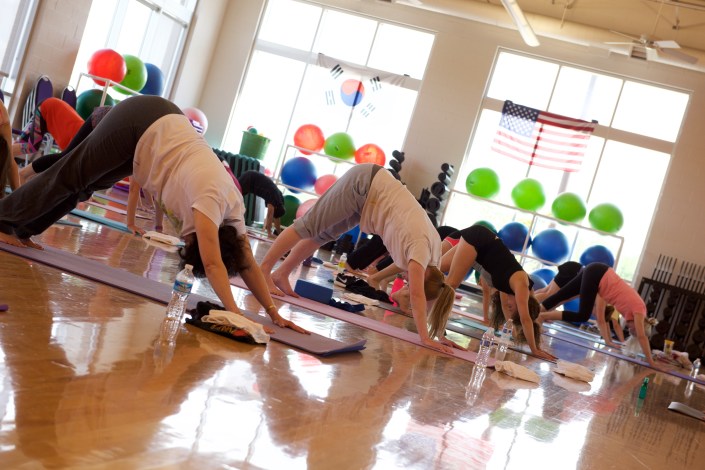
Next, pay attention to your body. This KNOWLEDGE leads you to the poses that are possible for your body on any given day. Learn new variations on your old favorites and rebuild your practice with modifications. Most yoga instructors are more than happy to suggest a few new poses for you, so don’t be shy!
Which leads to my final piece of advice: apply CREATIVITY to your practice. Find ways to take the pressure off of your wrists. For example, instead of down dog you can put your forearms down on your mat and do dolphin instead. Use the earth to ground you as you explore different stretches and movements.
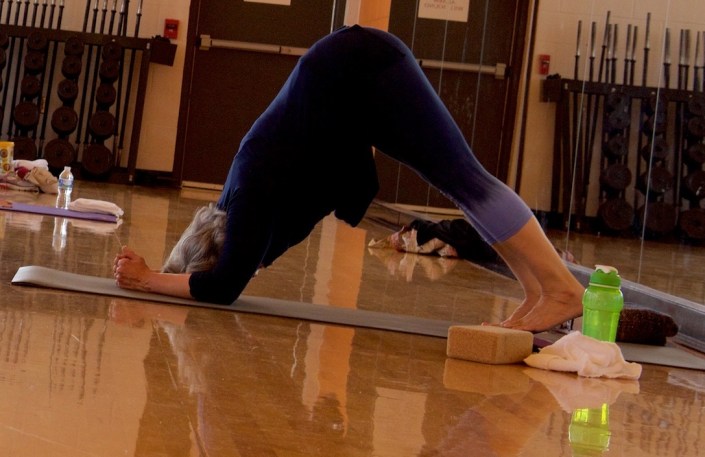
Let go of your preconceived ideas about what particular poses should look like, and shift your practice towards a healthy sense of confidence about your body, what it needs, and what it’s capable of.
 Jo Walker Yoga