Q & A — What Modifications Should I Make for My Wrists?
Posted on Updated on

Q: I’ve got arthritis in my wrists, but I love yoga and don’t want to give it up. What adjustments should I make?

A: You can certainly continue your yoga practice with a few simple changes.

First, you’ll need to practice ACCEPTANCE. There will be a few poses you will need to modify or skip. Arm balances may be fun and glorious for all of five seconds, but consider leaving them out of your repertoire. Find other poses that will provide the same benefits without causing pain. Remember the key to any yoga pose is to push your body just to the point of discomfort without crossing over to pain. If it hurts, don’t do it.

_wyz1656
 

Next, pay attention to your body. This KNOWLEDGE leads you to the poses that are possible for your body on any given day. Learn new variations on your old favorites and rebuild your practice with modifications. Most yoga instructors are more than happy to suggest a few new poses for you, so don’t be shy!

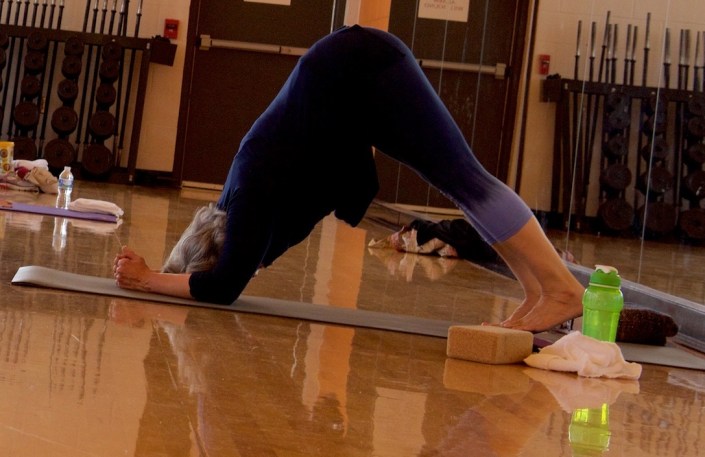
 Which leads to my final piece of advice: apply CREATIVITY to your practice. Find ways to take the pressure off of your wrists. For example, instead of down dog you can put your forearms down on your mat and do dolphin instead. Use the earth to ground you as you explore different stretches and movements.

jo_dolphin

Let go of your preconceived ideas about what particular poses should look like, and shift your practice towards a healthy sense of confidence about your body, what it needs, and what it’s capable of.

Can Yoga Be Defined?

Posted on Updated on

Ask a dozen yogis and you’ll get a dozen answers.

To paraphrase Richard Freeman, one of Jo’s yoga teachers and a top American yoga master, yoga can be difficult to pin down:

Yoga is relaxation and meditation, and it is this and that, and as we continue to describe the practice of yoga we quickly realize that we are describing just the edges of the practice, and we become tongue-tied. While it is a perfectly reasonable question to ask, yoga is so vast and unique to each practitioner that is seems impossible to answer. It simply must be experienced.

Richard Freeman teaches in locations all over the globe, but his home studio is in Boulder, Colorado. If traveling to Boulder Colorado to practice with Richard isn’t possible, here are the titles of audio workshops that Jo has studied and used for over a decade in her teaching and personal practice:

The Yoga Matrix: The Body as a Gateway to Freedom
Learn about the teachings that have informed many schools of yoga, and find out how your body can be the beginning site for spiritual growth.
79

Yoga Breathing: Guided Instructions on the Art of Pranayama
Learn the essentials of yogic breathwork.
322

The Astanga Yoga Collection: Explore the Depths of Ashtanga Yoga
Learn the Ashtanga Yoga tradition, as taught to Richard by master yogi K. Pattabhi Jois of Mysore, India.
763

In addition to his classes and workshops, Richard offers a wealth of information on his website, Yoga Workshop. Explore his library of information and his food blog.

Tap this resource and grow your practice in new ways!
Yoga Involves the Entire Being
Posted on Updated on

If you’ve been following our Top Ten Reasons to Practice Yoga series, then you’ve read about all of the ways yoga improves your muscle tone, endurance, and overall physical well-being. But yoga is so much more than exercise for your body. It is exercise for your vagus nerve, a hot topic in medical research right now.


In Latin, “vagus” means wandering, and that is exactly what the vagus nerve does: It wanders throughout your torso and connects to all of your major organs. The vagus nerve helps control your parasympathetic nervous system, which slows your heart rate, keeps your intestines and glands active, and relaxes your sphincter muscles. All things that keep you feeling healthy and well.


_len3153_cropped


What are we learning about the vagus nerve? And how does it relate to yoga?


The vagus nerve is how your brain communicates with your organs. Research is showing that we can improve this communication a few different ways. One way is through electrical pulses. Kevin Tracey, a neurosurgeon, discovered a way to intervene and steer the conversation, and he has been successful in reducing inflammation in rheumatoid arthritis patients.


Another way is through building up our vagal tone. People with high vagal tone are said to be in constant communication with their bodies.


This is where yoga comes in. Controlled breathing sends your nervous system a signal to slow down and calm. When we engage in Ujjayi Pranayama, sometimes called victorious breath, we cue our vagus nerve to step in and relax our body. Chanting is another practice that provokes a relaxation response.


_wyz1667


Over time, these repeated cues strengthen our vagal tone, and our bodies become well-versed in producing a relaxation response. Without vagal tone, our bodies experience a variety of conditions, such as chronic pain and depression. Yet another reason to keep returning to the mat!


Our physical bodies become active on the mat, our mind focuses, and our overall being calms. When Jo tells us, “All you need to do to be a success in this class is breathe,” she means it. Breathing does us plenty of good.

3 Kinds of People Who Come to Yoga Class

Posted on

Look around your yoga class and chances are you’ll see the three different kinds of people:


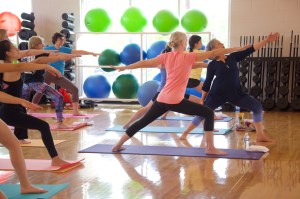
THE EXERCISERS
  • They come to class on time, sometimes even early so they can get set up.
  • They look the part and wear the right clothes.
  • They are professional and dedicated to their practice.
  • They tend to know their anatomy.
  • They love to look at themselves in the mirror.
  • They want to know what they’re doing and what they’re getting out of it.
_LEN3159
Photo credit: Lynn Donovan

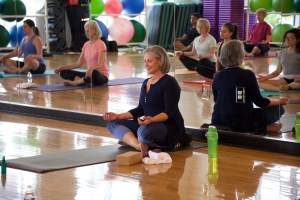
THE PEOPLE PEOPLE
  • They love eye contact.
  • They want to know everyone’s name.
  • They want everyone to know theirs.
  • They are often more interested in what the person on the next mat is having for dinner.
_LEN3148
Photo credit: Lynn Donovan

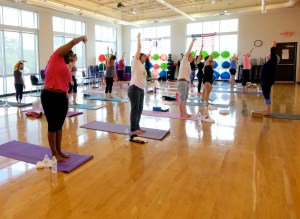
THE MUSIC PEOPLE
  • They tend to wander in and stay toward the back.
  • They often listen to their own music with earbuds and do their own thing.
  • These people need little more than a wave and a smile, they may just be back there dancing!
_WIL5242_cropped
Photo credit: Lynn Donovan

Which one describes you? Are you a blend? 

Save

Yoga Boosts Endurance and Sports Performance

Posted on Updated on

Tune into the 2016 Summer Olympics in Rio and you’ll see a myriad of strong, healthy bodies. No surprise there, but what you may be surprised to learn is that some of those ultra-fit athletes you see running, diving, cycling also practice yoga.


Many people imagine that yoga classes are just for [women, thin people, fit people, fill in the blank here], but the truth is that yoga classes are for anyone who wants to breathe, stretch, and spend time with their body on the mat.


Athletes need this too. Yoga can help athletes improve their performance by targeting particular muscle groups.


For example, Stephen Curry will be on the Olympic basketball team in Rio, and he has used yoga to improve his game and become successful.

Wizards v/s Warriors 03/02/11

[Photo credit: Keith Allison] Curry experienced multiple ankle sprains and surgery to repair his ligaments before turning to yoga. His trainer discovered that he was working his ankles much more than necessary, so he developed a routine for Curry that would shift his energy up to his core and hips.


The pose that helped the most? Airplane. He used this pose and others to strengthen his core, hips, and glutes, thus reducing his reliance on his ankles. And the added bonus of a regular yoga practice is an increased awareness of his body in space. So when you are watching Curry on the basketball court in Rio, pay attention to his amazing moves, all thanks to yoga.

Yoga as a Superior Form of Weight-Bearing Exercise

Posted on Updated on

Yoga is a superior form of weight-bearing exercise that can help prevent osteoporosis and improve posture in both men and women. Weight-bearing exercise is any exercise in which your body is working against gravity, and yoga certainly meets that description!
 
But yoga offers so much more than physical movement.
 
The ancient Indian philosophy of yoga offers us a holistic approach to bone health having nothing to do with clinical trials or changing scientific opinions. This approach has everything to do with alignment, balance, harmony, and a life lived in accordance to natural laws.
 
According to Dr. Susan E. Brown with the Better Bones Foundation, our bone health depends on our understanding of the interconnectedness of our bodies within nature. Dr. Brown has been researching bone health for over 20 years.
 
Everything we do for bone health should be good for the entire body. Given that the body is one single interwoven, intelligent system, every action we take to strengthen our bones should also be good for our entire body and as such will increase our overall health and enjoyment of life. This is the Better Bones, Better Body philosophy.
 
~ Dr. Susan E. Brown
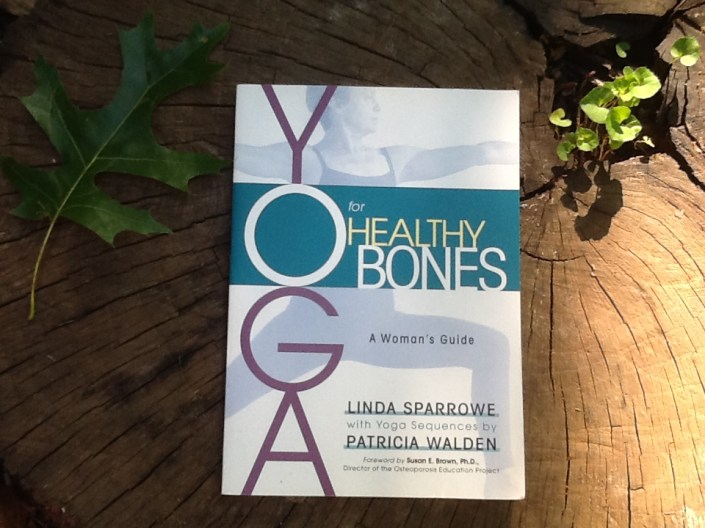
 
Jo recommends Linda Sparrowe’s book, Yoga for Healthy Bones: A Woman’s Guide. She says, “This book is 145 easy-to-read pages. Sparrowe packs this resource with lots of sequences and tried and true information. I get a laugh out of the subtitle. In my opinion, this is the perfect resource for anyone who has a body!

yogforhealthybones

Explore Nostril Dominance

Posted on Updated on

According to the Hatha Yoga Pradipika, life radiates within us in streams of energy called nadis. The special branch of yoga that studies the upsurge (udaya) of flowing energy (svara) within these nadis is called svarodaya, or svara yoga. Through the practices of svara yoga, you can learn to be aware of the presence of these streams of energy, to discern how they shift and flow, and to observe their relationship with inner and outer life.

~ from “Self-Study: Nostril Dominance” by Rolf Sovik and Dick Ravizza

Click here for Self-Study link.

BalleyFoster_inspirationplease
Photo credit: Balley Foster (no changes made to original)

Save

Yoga to Slow Down the Aging Process

Posted on Updated on

According to Jo, after 30+ years of building her own personal practice, she’s learned that yoga addresses every injury—physical and emotional—that you have experienced in your life, and it will positively affect every aspect of your life if you allow it to! And if you’re just beginning to practice yoga, there are plenty of resources to help you build your practice and realize the abundance of benefits. Yoga classes are widely available in studios, YMCAs, churches, and senior resource centers.
wheat_LukasSchweizer_Liliasquote as Smart Object-1
As you continue to practice yoga, you will be doing something wonderful for body, mind, and spirit. A regular practice gives your wellness an ongoing boost:
  • Your balance will be increased.
  • Your joints will be stretched and strengthened.
  • You learn to breathe more deeply and mindfully.
  • You’ll learn how to pay attention to your body.
  • You’ll discover how to focus your thoughts on the present moment.

For bodies who come to the mat with stiffness and aches and pains, gentle guidance is available. Here’s your go-to resource for yogis in their 40s, 50s, and beyond: Lilias Folan’s book, Lilias! Yoga Gets Better with Age.
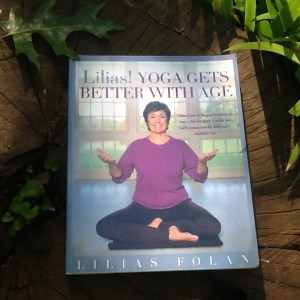
IMG_2778
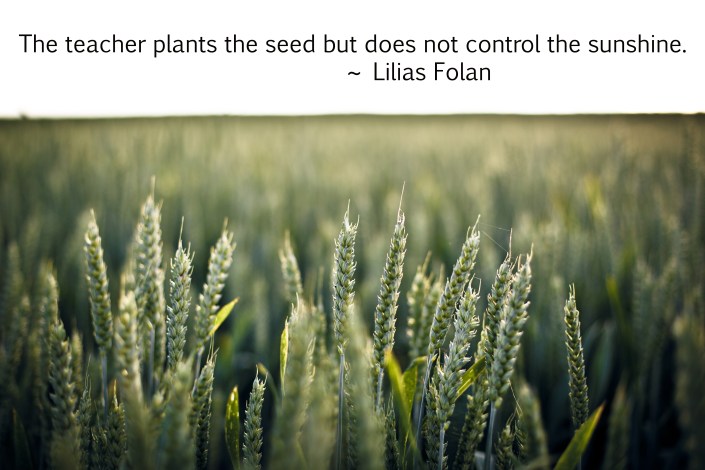
The book highlights what she calls “yin” yoga, a special technique to adapt traditional asanas to maturing bodies. She says, “Yoga emphasizes the doing and the practice. It can be adapted to fit every body, no matter what size, shape, age or physical condition. ALL ARE WELCOME.”
Attending classes will help you learn the basic poses, and books—especially books with plenty of large photos like Folan’s book—can show you some new poses. Your practice will build over time as you learn different ways to move and stretch, and your body will teach you that each session is unique. The important thing is to get on the mat regularly.

Save

Save

Yoga to Tone from Head to Toe

Posted on Updated on

To the casual observer, yoga is a gentle movement, a series of stretches. But to the practicing yogi, yoga postures, or asanas, are so much more than a simple stretch.


Yoga soothes and strengthens the back and firms, tones, and sculpts the entire body from head to toe. As you move through the poses being cued, you’ll use your big muscles for full body bends and stretches as well as many smaller muscles you may not think about day to day. With regular practice, whether you attend classes or build a home yoga practice, you will work every muscle in your body.

A full sequence of yoga asanas strives to work all sides of the body equally, with the goal of bringing balance from front to back and left to right. Yoga allows us to build strength by engaging particular muscle groups while keeping the mind relaxed and the breath flowing. We tone and sculpt the muscles by adding intelligent mindful movement.  And we challenge ourselves to the point of fatigue but never pain.

 A well-rounded asana practice consists of an equal number of forward, backward, and side-to-side stretches and at least one each of the following:

  • A warm-up pose
  • A balance pose
  • A spinal twist
  • An inversion
  • A back-bending pose
  • Deep breathing
  • A cooldown pose
  • Relaxation and meditation
Most poses work a range of muscles, engaging more than one muscle group and opening up a range of motion. Learn how to work at your own pace, modifying the poses to meet the needs of your body that day. You’ll always have the opportunity to spice up the pose with modifications.


Over time you’ll be able to challenge yourself in new and surprising ways and increase your endurance, strength, and flexibility. And you’ll experience the myriad other mental and emotional benefits of a yoga practice.
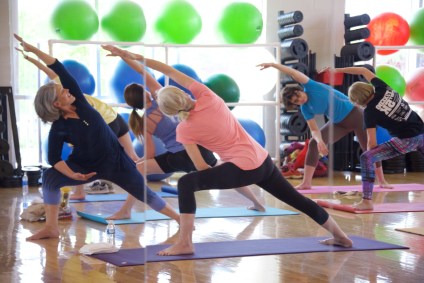
 

Photo credit: Lynn Donovan Photography